


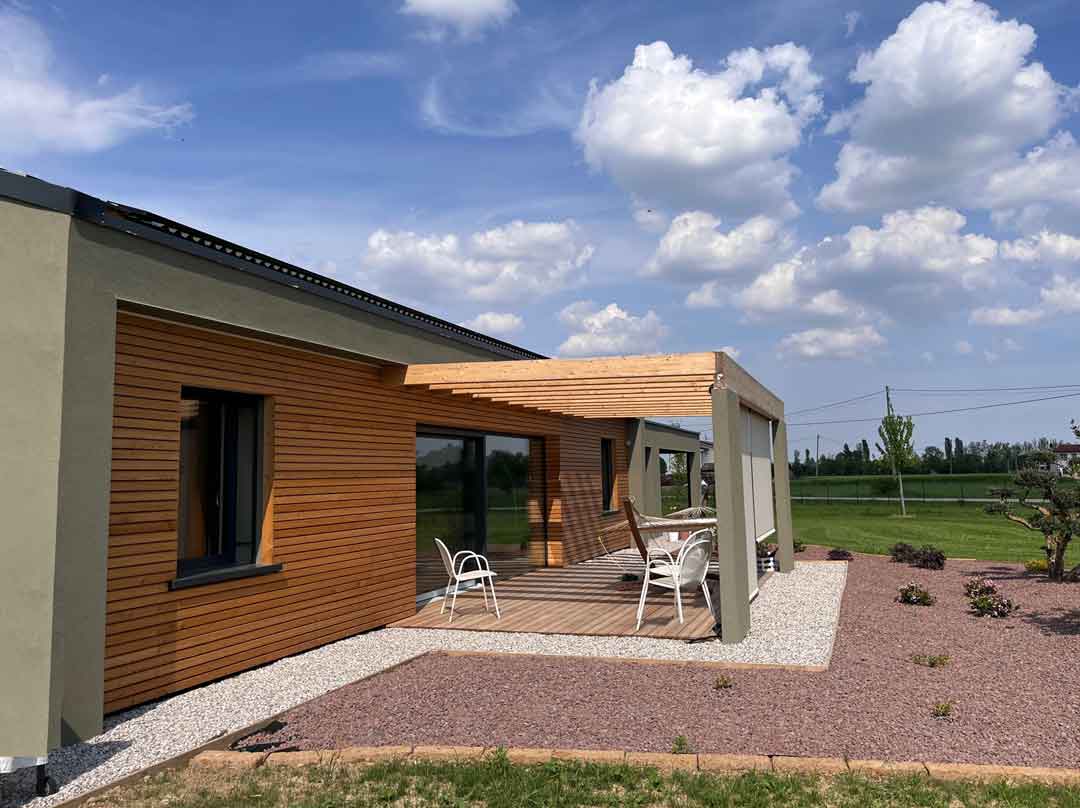
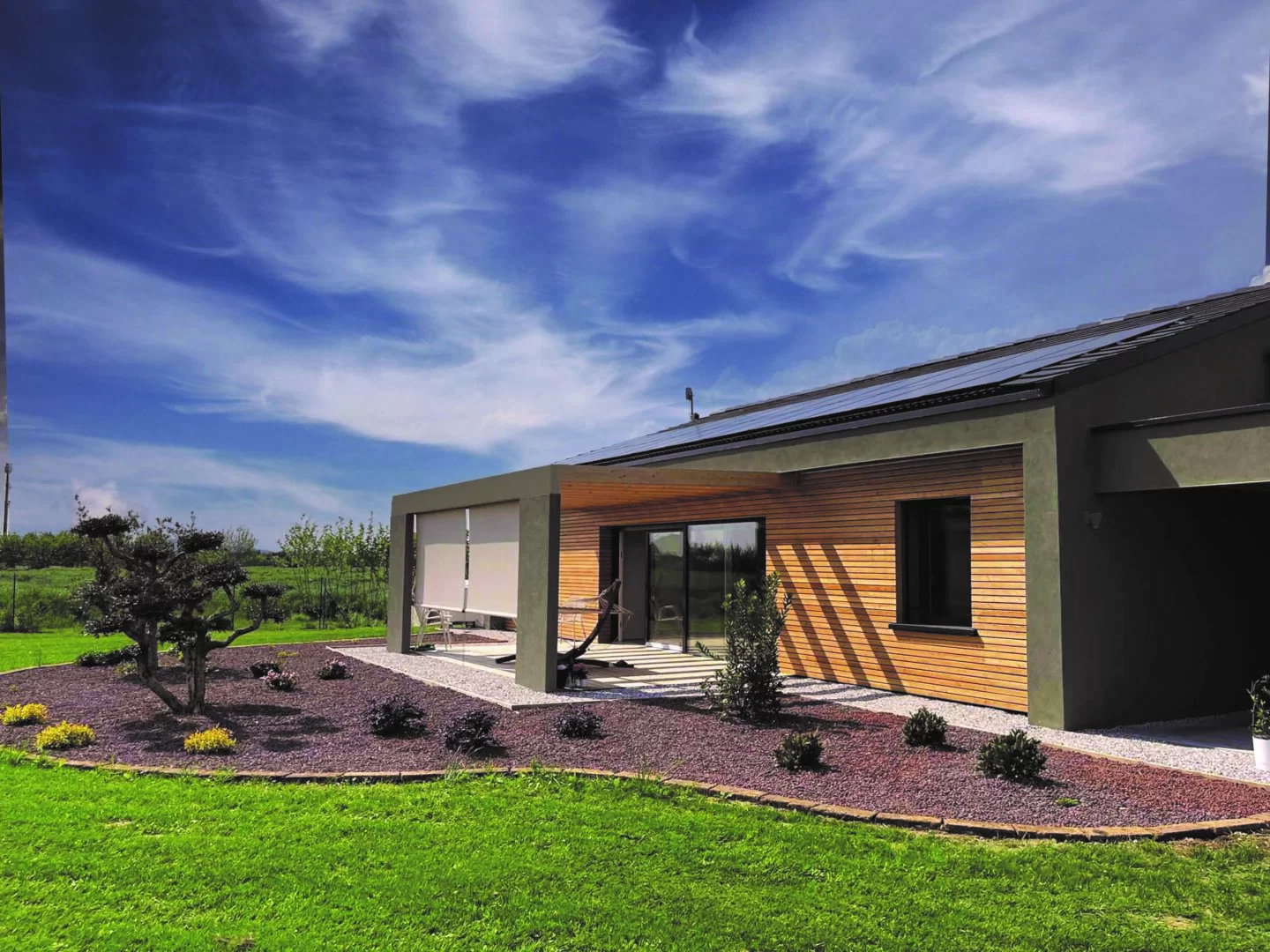
Here is a passive wooden house in the Veneto countryside.
The project
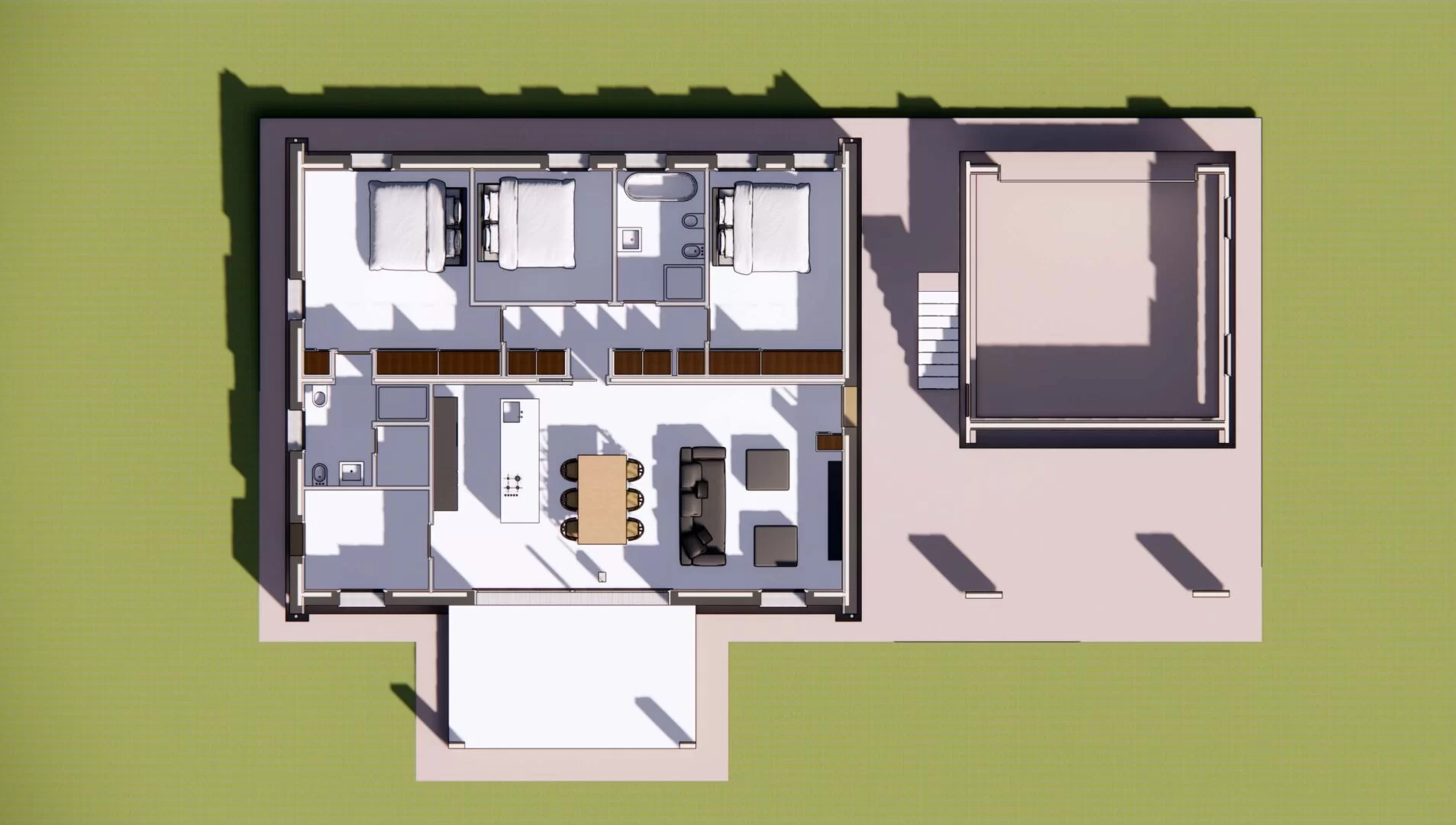
It is a single-story property of about 150 sq. m. comprising 3 bedrooms, a large living room, technical rooms and lofts.
Flanking on the east side is a porch with garage and solarium on the flat roof.
The setting
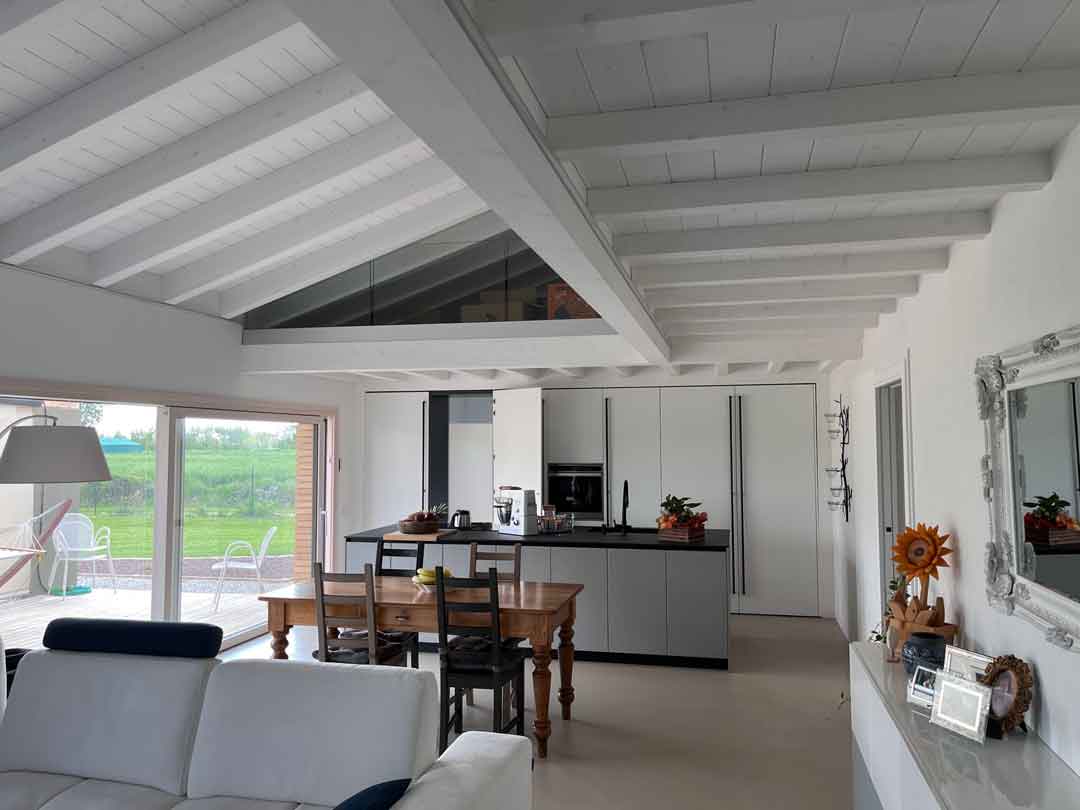
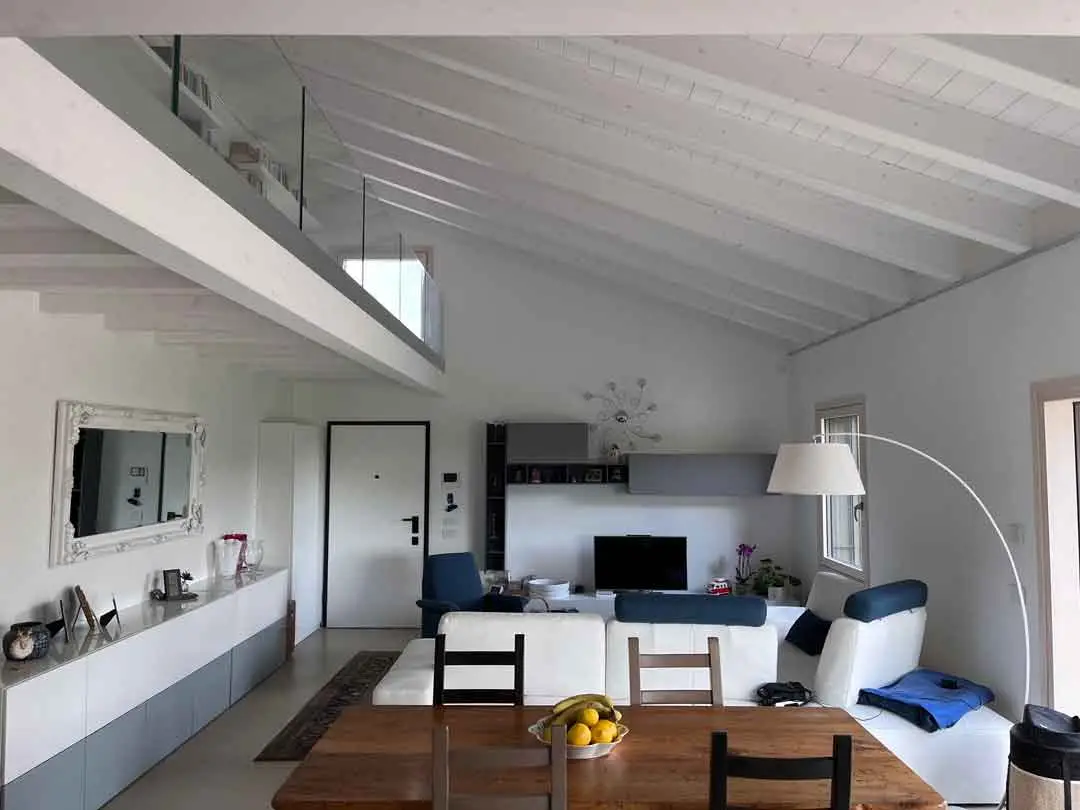
The floor plan layout is classic: it provides a living area to the south and a sleeping area to the north. The design approach provides a generous open space with a countertop kitchen and TV area.
The space is enhanced by a generous glass window with lift-and-slide doors that allows people to enjoy the surrounding space and capture free solar energy in the winter time.
A restructuring
The project involved the demolition of an existing ruin and the new construction of a passive wooden house according to our standards.
The structure
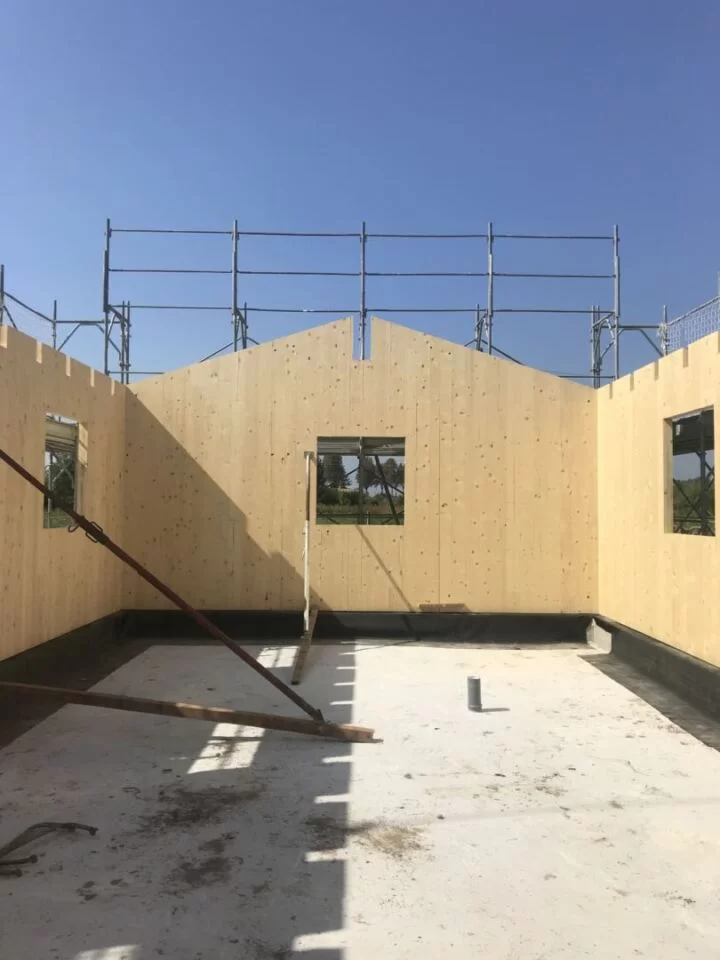
The vertical structure was made of 10-cm-thick XLam panels, while the roof was made of glulam beams.
Foundations
The foundations are rafted. As per the construction technique used, the Xlam panels were mounted on concrete curbs that rise from the slab in order to ensure the detachments of the wood from the surrounding soil.
Insulation and installations
This new house was built by providing:
- 20 cm mineral wool coat;
- 6 KWp photovoltaics;
- 10 KWh storage batteries;
- EV charging column;
- hydronic heat pump;
- Triple wood windows and doors with aluminum exterior;
- central mechanical ventilation(CMV).
Energy independence
This is a passive house with very limited consumption (around 10 KW/sqm/year). There is no connection to natural gas, and the provision of photovoltaics with storage ensures semi-self-sufficiency in energy.
Our service included the following works and services:
Zero-mile passive house
As per international guidelines Passivhouse materials and work suppliers are local, this allows a reduction of gray energy during construction and better traceability of supplies to better ensure after-sales service.
Design
The project carried out by Lignodesign included:
- architectural executive design;
- Structural and facilities design;
- Reinforced concrete storage and testing;
- seismbonus practices;
- Enea eco bonus affidavit.
Digital modeling
Every building element is digitized using BIM technology that allows perfect visualization and quantification of every detail of the property.
Construction site setup
Site setup with provision of crane, toilet, temporary fencing, standardized scaffolding and other necessary devices to ensure safety. Temporary construction site connection and water will be provided by the client.
Excavation
Machine-executed general overburden excavation with partial piling on site of material for the recovery and/or reuse of topsoil, performed up to the collar of the foundations. Execution of excavation for all foundations up to the level of impost, for buried piping and installations.
Foundations
Unreinforced concrete lean-to subfoundation.
Concrete slab foundations (30 cm) cast with the aid of formwork according to the dimensions specified in the project, including iron reinforcement.
Insulation against ground
An insulating layer and a layer of lightened foamcem screed was made at ground level to house the systems.
Vertical structures
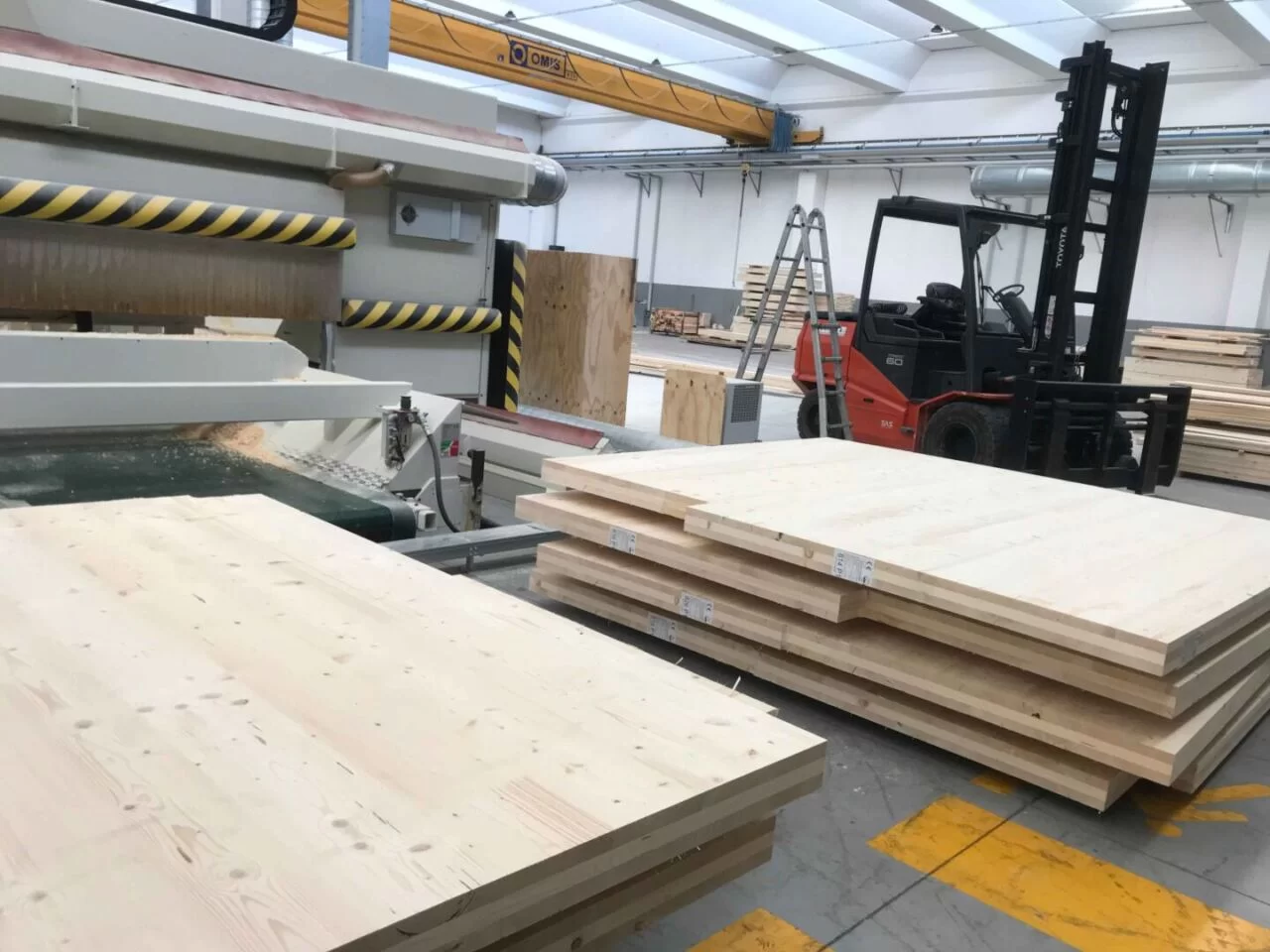
Perimeter load-bearing walls in Xlam of Italian PEFC-certified production of the standard 100 mm type (or if required of larger dimensions complete with fasteners such as Rothoblaas or Borga Italia.
XLam load-bearing wall, composed, in sequence from the inside to the outside by :
- double sheet of 12.5 mm plasterboard; in the case of facing the bathroom, water-repellent plasterboard will be used;
- 50 mm cavity for plant passage with 5×4 cm fir laths insulated with 50 mm rock wool (or thicker for any larger diameter pipes);
- 100 mm 3-layer XLam load-bearing wall (depending on structural calculations);
- 200 mm rock wool coat density >135 kg/m3, l = 0.037 W/mK;
- 5mm mineral plaster with plaster carrier mesh and siloxane finish.
The structure in X Lam, how it contributes a passive house in the Venetian countryside
Invented by a group of wood-frame manufacturers in Austria in the late 1990s , XLam makes it possible to create both contemporary and classic architecture with a sustainable and environmentally friendly material with the appearance of traditional masonry but with the benefit of:
- Increased speed of construction;
- low energy consumption;
- Very high seismic resistance.
Roof
The roof of this passive wooden house in the Veneto countryside was built with a load-bearing structure of pre-painted glulam beams of the color white including:
- mm 20 wooden bead;
- mm 25 45° planking;
- Vapor barrier;
- mm 200 Rockwoll Hardrock type high-density rockwool insulation for roofs;
- Ventilation lath and counter lath;
- Tile roof tile in the color of your choice in terracotta from San Marco Brickworks.
Window frames of a one-story zero-consumption house in the Venetian countryside
The window and patio door frames made of laminated wood complete with tilt and turn, burglar-proof system, standard handles, triple-walled double glazing 4/22/4/22/4 gas and in patio doors part under glass 6/6+16+6/7, totally in accordance with energy-saving regulations, CE mark of the dimensions as per the project.
Photovoltaic system
6.5 kwp photovoltaic system (with panel and inverter) with integrated panels with inverter and GSE connection arrangement.
Thermal power plant
The main generator will be an air-to-water heat pump of approximately 12 kw thermal to create hot water for heating and DHW production and cool water for air conditioning and dehumidification in the summer phase.
300-liter kettle for the production and storage of Domestic Hot Water for sanitary uses.
In comfort of a passive house in the Veneto countryside: the heating/cooling system
Heating/cooling will be done in radiant floor mode. Plasterboard panels will be built into the wall with pipes embedded inside where hot water created by the heat pump will flow and give the room the energy needed to heat. In the same panels will flow cool water in the summer phase for radiant air conditioning.
Climatic mechanical ventilation system
This system integrates a system that constantly reciprocates the air mechanically inside the house by recovering the heat in the outgoing air (enthalpy) and a the system that will dehumidify the air in the summer phase to make the room perfectly air-conditioned. A passive wood house in the Venetian countryside primarily requires good air exchange since the Venetian plain is well known to be hot and humid, and therefore regular air exchange is essential in order not to have a closed smell.
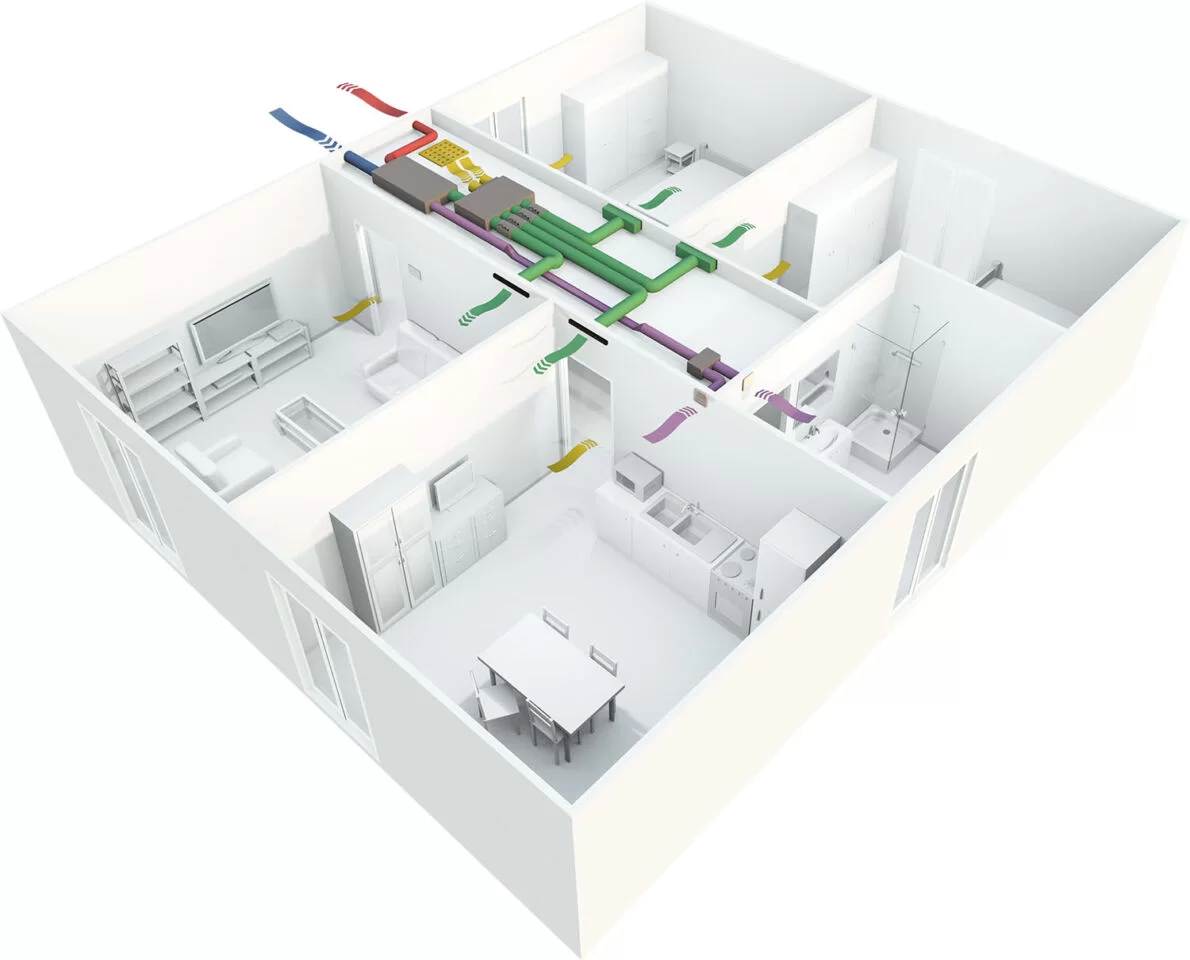
Mechanical ventilation reciprocates air constantly, taking it from the ‘dirty’ compartments (bathroom, kitchen, laundry room) and putting it back into equiportment in the noble compartments (bedrooms, living room…). This replacement is done through a machine that recovers the heat from the extracted one by preheating the newly introduced replacement one.
The dehumidifier is installed on the ventilation supply so that it can be provided dehumidified in the summer phase. This allows, in conjunction with radiant cooling panels in the summer period, to provide radiative air conditioning in the warmer periods.