


An ancient concept we now call green building
When we talk about green building we are not talking about a fad or an advertising slogan.
We are talking about a very simple principle: green building sustainable wooden houses represents a responsible and innovative approach to building.
Reduce the use of materials that do not belong to the biosphere as much as possible
intelligently using the construction technologies available today.

Actually the concept is much simpler and much older.
Before the advent of oil and plastics, all construction was automatically green building.
Buildings were made from materials found in the biosphere:
wood
stone
earth
brick
lime
Local materials, often sourced within a few kilometers of the construction site.
The technologies were simple but remarkably effective-many of those buildings are still standing after centuries.
Venice: a masterpiece of green building ante litteram
One of the most striking examples is Venice.
The entire historic center of the city is built on wooden foundations:
million poles from the forests of the Alps
Istria stone for the parts in contact with water
bricks produced in the Venetian hinterland
It is a remarkably intelligent system.

The trees used for the foundations grew from the sun’s energy and, during their growth, absorbed CO₂ from the atmosphere.
In other words, the city structure was literally built with material that took carbon away from the environment.
This is the deepest principle of green building.
Even the ancients were not perfect
When we look at the buildings of antiquity we tend to imagine them as perfect examples of natural building. In many cases this is true: the buildings of ancient Rome were made of materials from the biosphere such as stone, wood, brick, and lime.

However, past civilizations also used materials that we know are problematic today. The Romans, for example, often employed lead in plumbing and kitchen utensils. This metal, which was easily worked and widespread at the time, probably caused forms of intoxication over time.
This example reminds us of something important:
not everything that belongs to the biosphere is automatically beneficial to life. Viruses and bacteria are also part of the biosphere.
Sustainability depends not only on the natural origin of materials, but on scientific knowledge and conscious use of them.
Green building does not mean going back in time
People often think that building green building means rejecting modern technology.
It doesn’t.
Our goal is not to rebuild houses as they were done in the Middle Ages.
The goal is to reduce the environmental impact of construction by making intelligent use of the technologies available today.

Building well in 2026 means striking a balance between:
environmental sustainability
energy efficiency
durability of structures
technical reliability
sustainable costs
Green building, therefore, is not a religion.
It is a conscious design approach.
Structural wood: a self-producing material
Structural wood is one of the most environmentally interesting materials.
For a very simple reason:
The raw material is self-produced in nature.
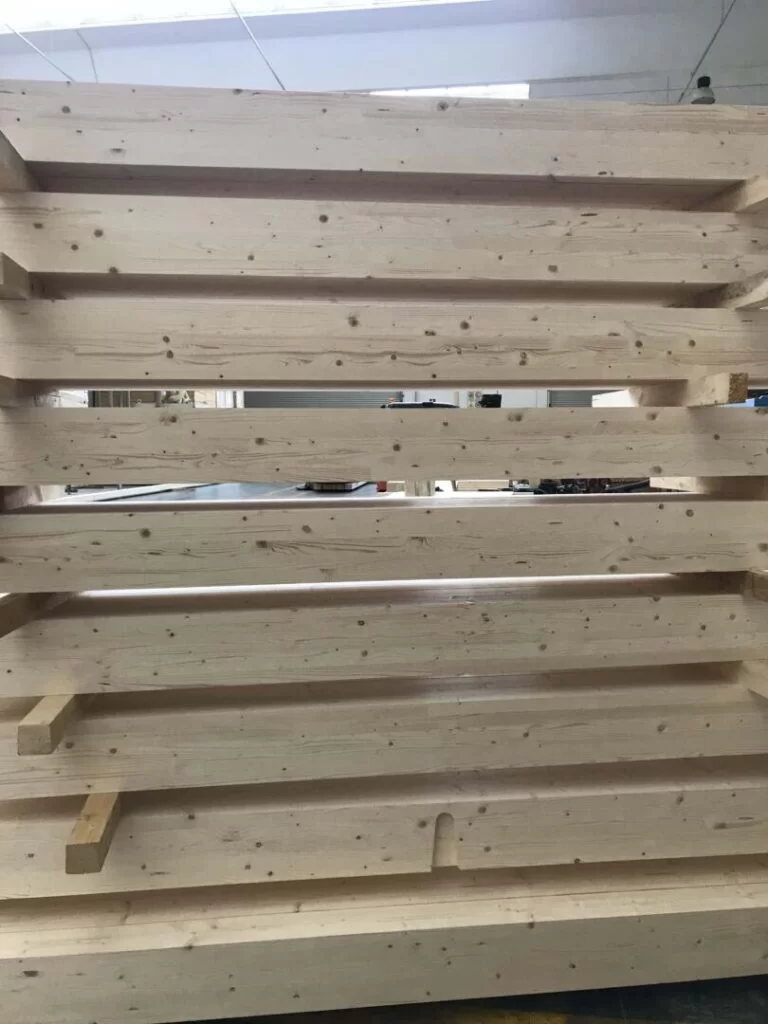
Trees grow because of:
solar energy
water
carbon dioxide
During growth they absorb CO₂ from the atmosphere and store it in the wood fiber.
| Material | Impact CO₂ |
|---|---|
| Structural wood | negative (storage CO₂) |
| Concrete | moderate emission |
| Steel | very high emission |
When we use wood in construction:
That carbon remains stored for decades or centuries
production of the material requires much less energy than cement or steel
This is one reason why wooden structures are becoming increasingly popular.
The problem of plastics and microplastics
In recent years the world has become more aware of a major problem:
pollution from plastics and microplastics.
Millions of tons of plastic end up in the planet’s oceans and biological cycles every year.
International organizations, governments and scientific institutions are working to:
Reduce the production of non-recyclable plastics
limit disposable items
improve recycling systems
This is a serious issue and affects everyone.
The construction industry also needs to ask itself about this.
The truth: today we cannot build without plastics
At the same time you have to be honest.
Today it is virtually impossible to build without also using petrochemically derived materials.
And it would not always make sense to avoid them.
For example:
waterproof membranes
air sealing tapes
synthetic insulators
hydraulic piping
technical components for plants
Many of these products are extremely effective, durable and relatively inexpensive.
Think, for example, of modern sanitation systems such as those produced by Geberit.
Would it be possible to replace some plastic components with metal materials?
Yes.
But the result would be often:
more expensive
less efficient
less durable
The principle of pragmatic green building
For this reason, our approach to green building is pragmatic.
We do not seek ideological perfection.
We seek instead to:
Reduce energy-intensive materials
Favor natural or renewable materials
Use synthetic products only where really useful
ensure long service life of constructions

For example:
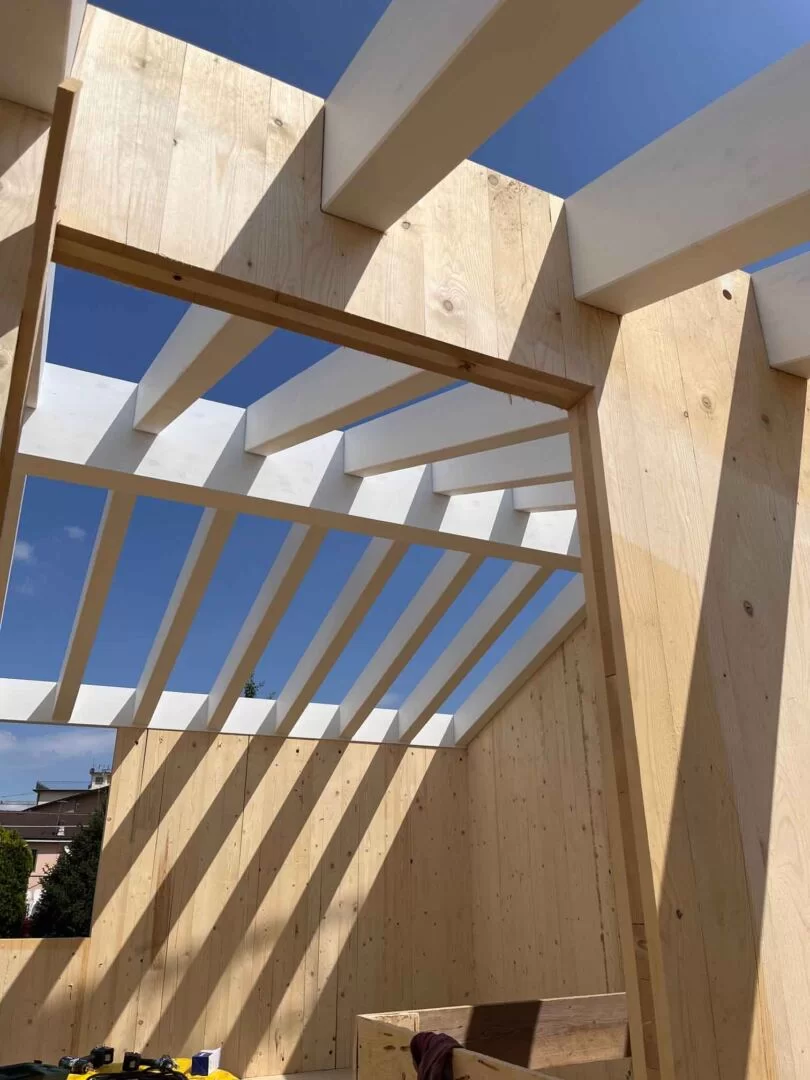
we use wooden supporting structures
We reduce the use of concrete and steel as much as possible
we use natural insulators whenever possible
But we also adopt modern technical solutions when they are more reliable
A concrete example:
EPS for some insulation applications
Synthetic membranes to protect against moisture
polyethylene piping for facilities
These are reasonable technical compromises.
Green building and “green marketing”: they are not the same thing
In recent years, the term green building has also been increasingly used as a marketing tool. There is nothing wrong with communicating environmental concern, but it is important to distinguish between marketing label and technical substance.
A building does not become sustainable simply because it uses one more “natural” material than others. True green building comes from a coherent set of design choices: structure, insulation, durability, efficient systems, indoor air quality, and reducing the energy needed to produce the materials.
In other words, it is not the individual product that makes a house sustainable, but the overall balance of the design. It is on this balance that the quality of a building over time is really measured.
True sustainability is about smart compromises
A sustainable home does not come from a single miracle material.
It stems from hundreds of small design decisions:
orientation of the building
thermal insulation
ventilation
quality of facilities
durability of structures
ease of maintenance
If a building lasts 100 years instead of 30, the overall environmental impact is greatly reduced.
Sustainability is also durability.
The future of building materials
Materials technology is evolving very rapidly.
In recent years they have been emerging:
high-performance recycled plastics
insulators of vegetable origin
increasingly high-performance engineered woods
concretes with low clinker content
It is likely that we will see even more sustainable materials in the coming decades.
Green building is therefore not an end point.
It is a path of continuous improvement.
Building with consciousness in 2026
In our daily work we simply try to do this:
Use the best that technology has to offer today
Reduce environmental impact where possible
Ensure quality and reliability to buildings
avoid slogans and ideologies
Green building is not a trademark.
It is a way of designing and building with respect for the planet and responsibility to future generations.
With balance, common sense and technical knowledge.
Building well today means finding a balance between nature and technology.
Use renewable materials whenever possible, limit the impact of the more energy-intensive ones, and design buildings that are meant to last.
After all, green building is nothing more than that:
build with respect for the planet and with responsibility to those who will inhabit these homes in the coming decades.
The role of the engineer: working on behalf of life
There is a very interesting principle in the Italian code of ethics: the engineer practices for the benefit of life, safety and welfare of society.
If we think about it, this principle is naturally akin to the values of green building.
Designing durable, efficient buildings with the least possible impact on the environment means, after all, actually applying this professional commitment.
Frequently asked questions about green building
What is green building in simple words?
Green building is an approach to construction that seeks to reduce the environmental impact of buildings by favoring natural or renewable materials, improving energy efficiency and designing buildings that will last.
Is a green building house necessarily a wooden house?
Not necessarily. Wood is one of the most environmentally attractive materials because it is renewable and stores carbon, but green building is about the entirety of design choices: materials, insulation, systems, and building durability.
Is it possible to build today without using plastics?
This is very difficult in practice. Some petrochemically derived materials are popular in construction today because they offer high performance and low cost. The most realistic approach is to reduce their use and employ them only where they are really needed.
Does green building cost more?
Not necessarily. Some solutions may have a slightly higher initial cost, but well-designed buildings with durable materials tend to reduce energy and maintenance costs in the long run.